

AP Royal Oak 15500 reps have been stuck with the same problems for years. The movement was a decorated Miyota with a loud rotor and the wrong architecture. The dial texture was flat and didn't catch light the way the gen's "Grande Tapisserie" pattern does. The bracelet link count was wrong. If you'd handled a gen 15500, any one of these would flag the rep immediately.
VSF Watch entered the AP market with a Dandong 4302 integrated movement and a ground-up rework of the case and bracelet. Here's what changed across seven areas.
1. Movement: Dandong 4302 with ceramic bearings
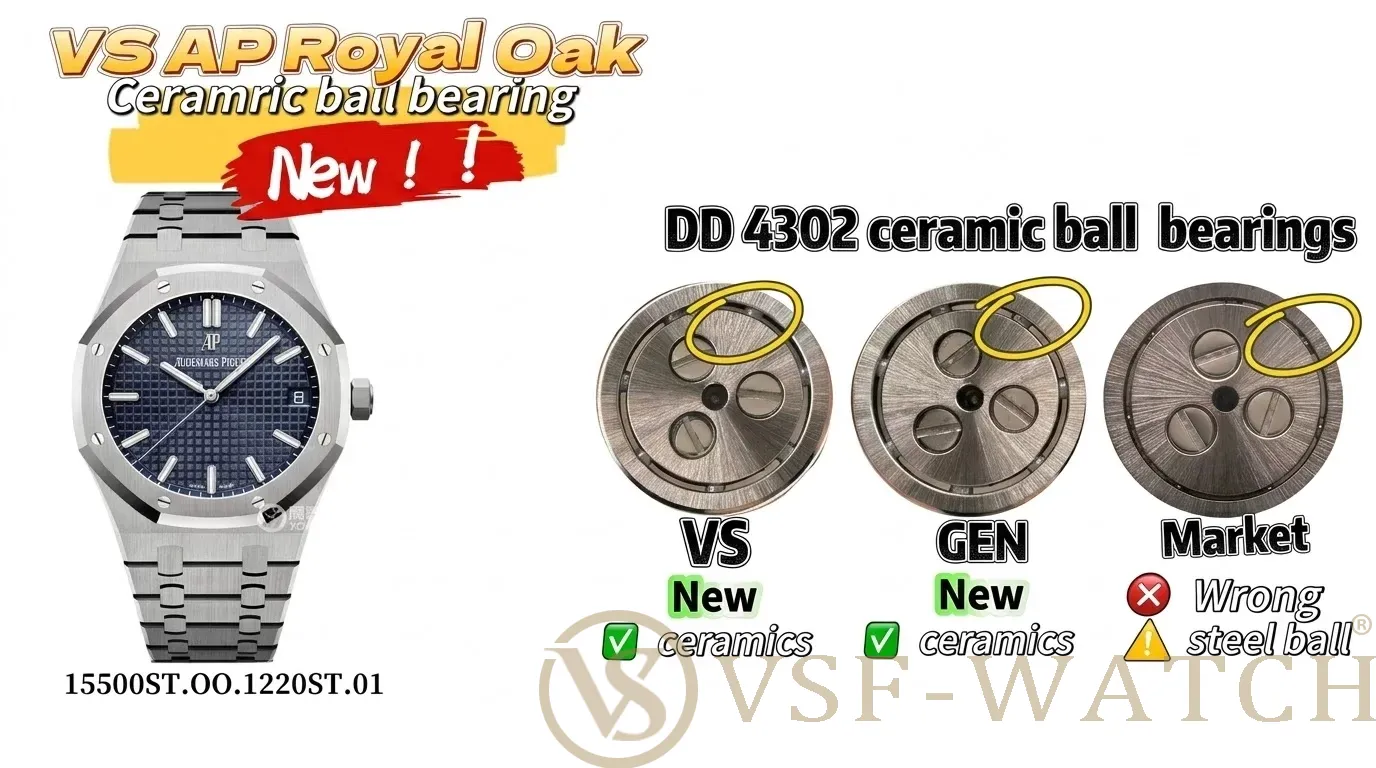
The old approach was a Miyota 9015 with decorative plates screwed on top. The rotor was noisy — a metallic scratching sound every time the watch moved — because the Miyota uses steel ball bearings in the winding system. Under a display case back, the plate seams were visible, and the movement architecture didn't match the gen at all.
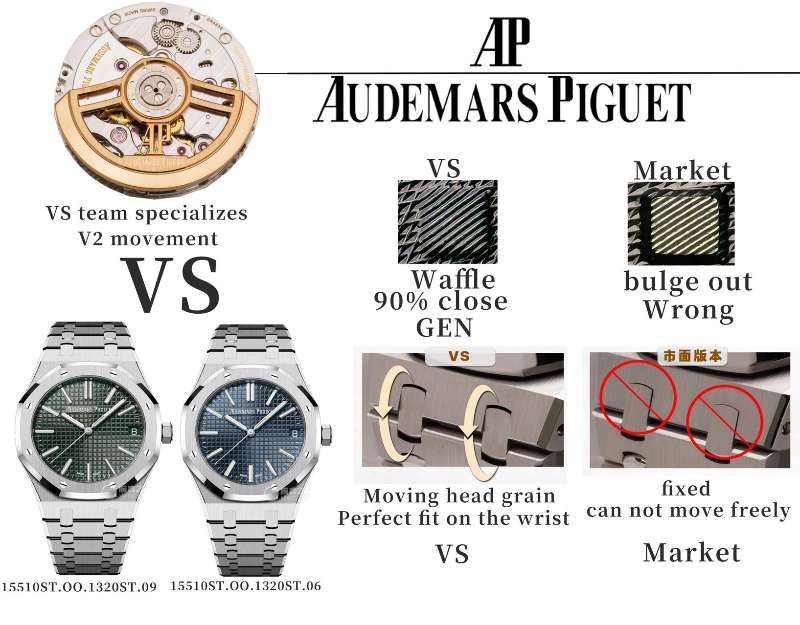
The Dandong 4302 is an integrated clone built to gen specifications. No overlay plates. The rotor runs on ceramic ball bearings, which eliminates the noise and improves winding efficiency. The movement layout, bridge shapes, and rotor engraving match the gen architecture. If you're looking through the sapphire caseback, this is the first AP rep where the movement actually looks like it belongs there.
2. Dial: Grande Tapisserie pattern
The Grande Tapisserie dial is a checkerboard of raised squares, each engraved with concentric micro-circles. Getting the light behavior right requires CNC machining each square individually rather than stamping the pattern. VSF spent over a year on the process.
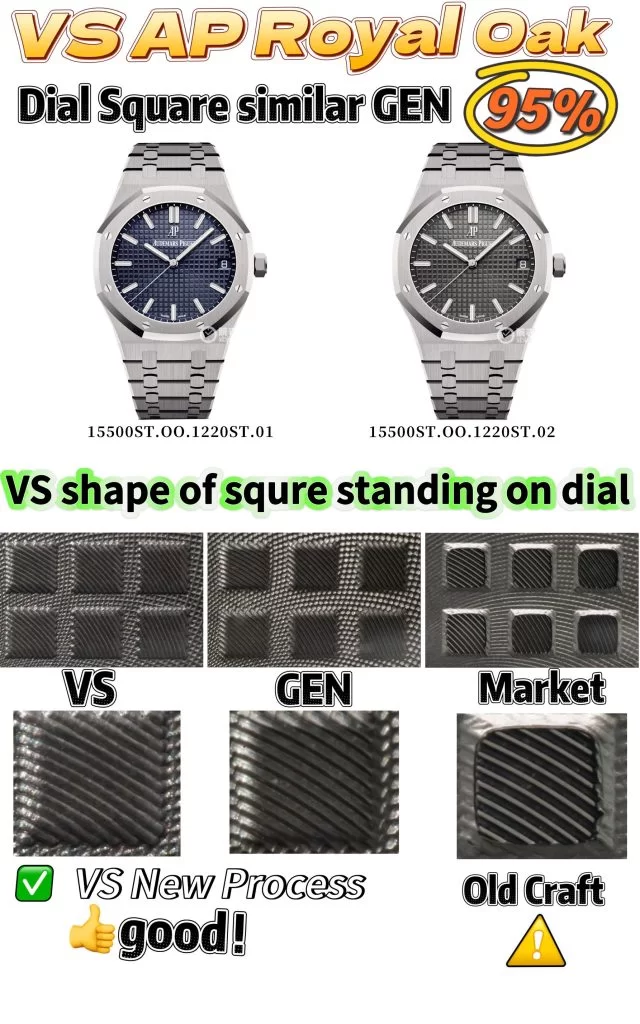
The result is about 95% of gen. The squares catch light dynamically as the watch moves, with a sunburst effect that shifts across the dial. Standard market dials are flatter and less reflective because they're stamped rather than individually machined. The difference is most obvious under angled light: VSF's dial moves, market dials sit flat.
3. Bracelet: 23 links (not 24)
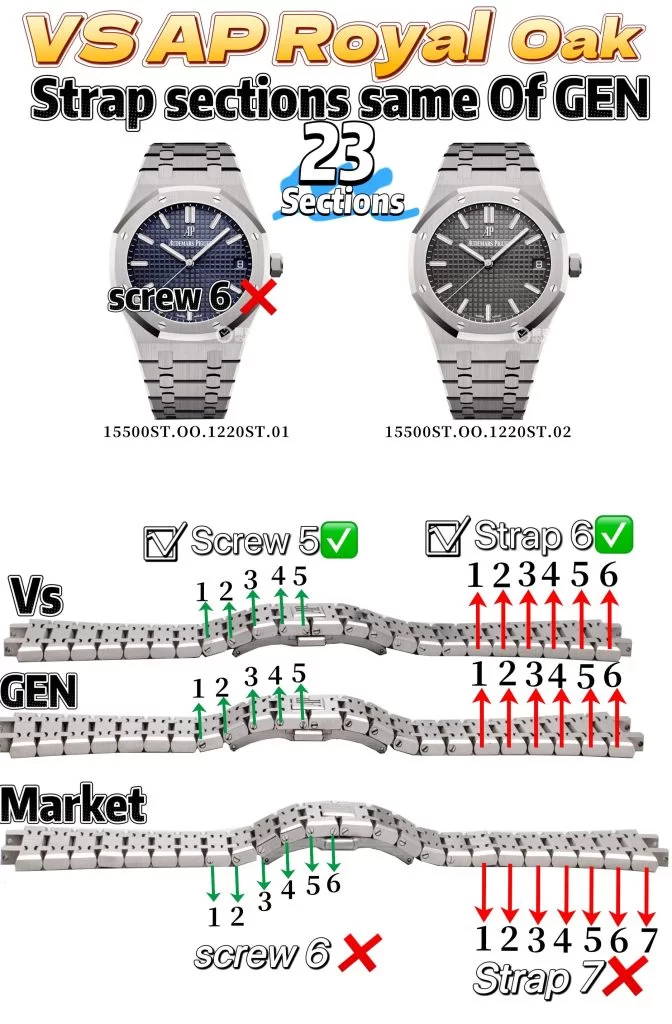
Almost every previous AP 15500 rep used 24 links on the bracelet. Gen has 23. It's one of those details that sounds minor until you count the links and realize the bracelet is proportionally wrong. VSF fixed the count to 23. The link articulation is smooth — no hair pulling, no stiff sections. The bracelet drapes naturally rather than sitting rigidly.
4. End-link drop angle
The first links where the bracelet meets the case determine how the watch sits on the wrist. Standard reps have stiff, wide end-links that flare outward, making the 41mm case wear larger than it should. On smaller wrists, the lugs overhang, and the watch looks wrong.
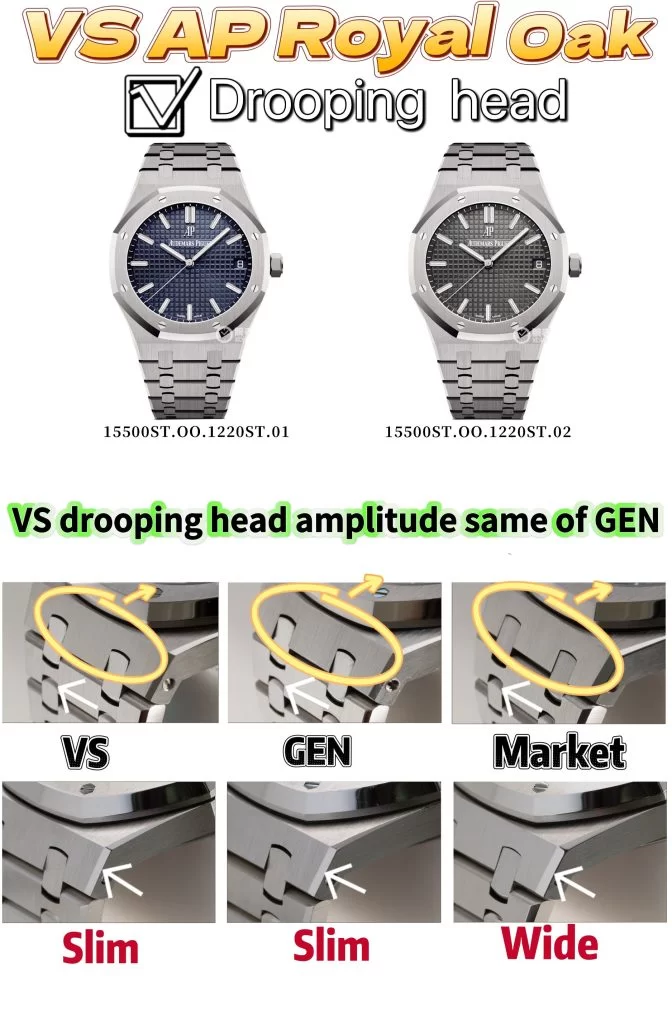
VSF tightened the end-link articulation. The first links drop at a steeper angle, hugging the wrist the way gen does. The watch sits flatter and wears closer to the 41mm diameter rather than feeling oversized.
5. Hand stack: pinion width
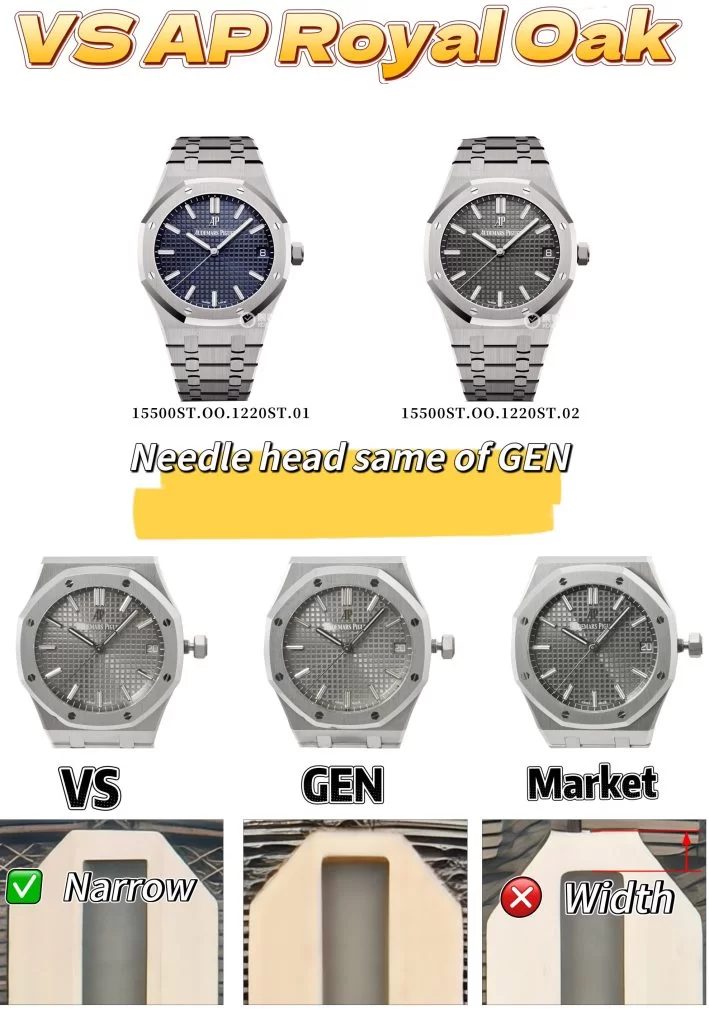
Under macro, a common tell on older AP reps was the base of the hands — the pinion area where the hands mount. Standard versions were too wide, making the hand stack look thick and clumsy. VSF retooled the hands to match gen proportions: narrower, sharper, cleaner at the center pivot. It's a small thing, but it changes how the dial reads at arm's length.
6. Lume texture and date font
Standard AP reps use flat painted luminous material on the markers. VSF applied Swiss Super-LumiNova with a grainy texture that matches the gen application. Under a loupe, the difference is visible: flat paint vs. textured compound.
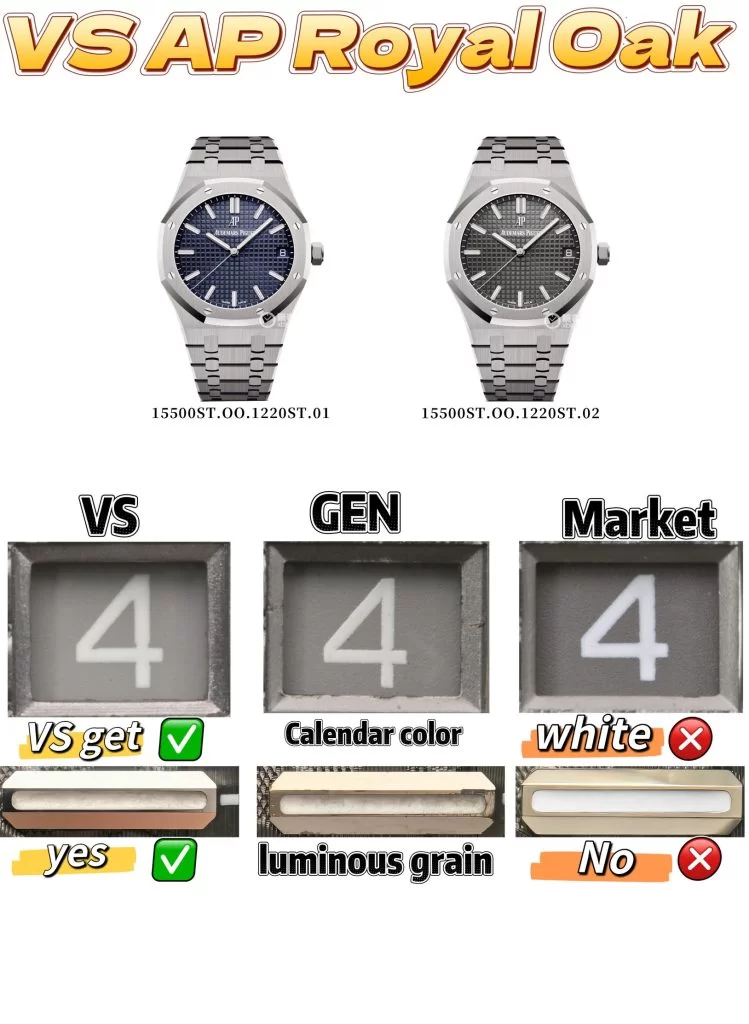
The date wheel is another detail. Budget versions use stark white ink. Gen date font has a warm cream-yellow tone. VSF color-matched this correctly, so the date window blends into the dial rather than standing out as a bright white rectangle.
7. Clasp: sunken screws and the "Sea Lion" logo
Two details on the clasp. The screw holes along the bracelet link edges are slightly sunken, matching gen machining. Standard versions leave them flush.
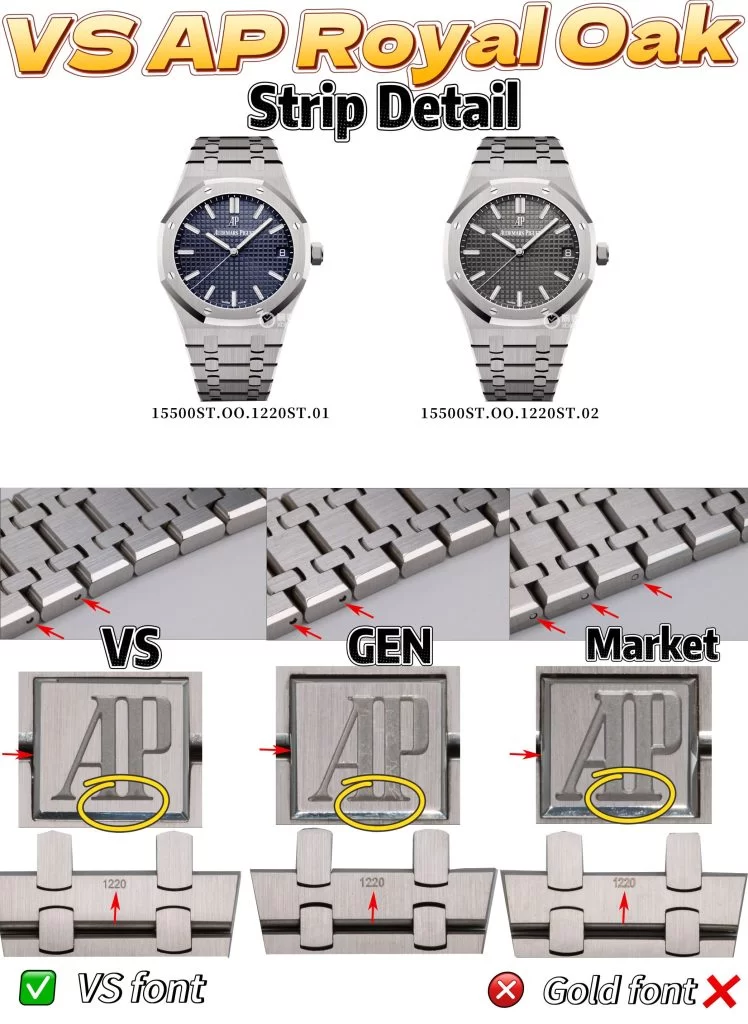
The AP logo engraving on the inner clasp has a specific typographic quirk: the bottom serifs of the letters curve outward in a shape collectors call the "Sea Lion foot." VSF replicated this. Market versions use a standard sans-serif font that misses the curve entirely. Under a loupe, it's one of the quickest ways to identify a VSF AP clasp vs. a generic one.
| Feature | VSF 15500 (Dandong 4302) | Standard market versions |
|---|---|---|
| Movement | Dandong 4302 integrated, ceramic bearings, quiet rotor | Decorated Miyota 9015, steel bearings, noisy rotor |
| Dial | CNC-machined Grande Tapisserie, dynamic sunburst | Stamped, flat texture |
| Bracelet links | 23 (correct) | 24 (wrong) |
| End-link angle | Steep drop, hugs wrist | Stiff, wide flare |
| Pinion width | Narrow, matches gen | Oversized, thick |
| Lume | Grainy Super-LumiNova texture | Flat painted |
| Date font | Warm cream-yellow | Stark white |
| Clasp logo | "Sea Lion foot" serif curve | Generic sans-serif |
Bottom line: The Dandong 4302 movement is the main reason this release exists. A decorated Miyota never belonged in an AP rep, and the noisy rotor was a tell you couldn't ignore. The ceramic bearings fix the noise. The integrated architecture fixes the display caseback problem. The dial, bracelet link count, end-link geometry, and clasp details are correctly executed.
The usual caveat: the Dandong 4302 is a relatively new movement. Long-term reliability data isn't as established as the Dandong 4130/4131 series. Parts availability and watchmaker familiarity are lower than for Miyota-based AP reps. If serviceability matters to you, factor that in before buying.
 VSF Watch AP Royal Oak 15510: What Changed from the 15500 an
VSF Watch AP Royal Oak 15500 (Dandong 4302): Why is it so po
VSF Watch AP Royal Oak 15510: What Changed from the 15500 an
VSF Watch AP Royal Oak 15500 (Dandong 4302): Why is it so po